Friday, March 8, 2013

It is what it is


Do you ever get so caught up in your to do list that nothing actually is accomplished except more worry and anxiety?  I feel like that has been the story of my last two weeks.  Because my semester is divided into terms, I just started a new class.  While I love learning about the miracle of life aka maternity childbearing, I must say I am easily stressed with the idea of a new teacher, new clinical instructors, and different testing styles. And of course my attention has been solely focused on classes, occasionally interspersed with work.  Lately, I have been living my life according to due dates for assignments.  And frankly, I have been quite a slacker when it comes to prayer. 

While I still might be doing alright in school and completing everything, I still feel like my life is slowly falling apart.  It is not like I have experienced a traumatic event that makes me feel this way.  It is all the little things that I keep telling myself are not a big deal.  For example, as I am sure you have noticed, I have not been very successful in blogging.  My night prayers are becoming far and few in between.  Not exactly the best way to start off lent. 

I like to be told “It is okay.  I am sure it is no big deal” because I think it allows myself to be less accountable for my mistakes and unmet expectations.  But, sometimes I just need to be told how it is.  This week I have discovered the little black book my parish handed out at the beginning of lent.  (It has been sitting on my dresser since Ash Wednesday, yet another example of slacking).    On Tuesday’s reflection, it talks about how last Sunday’s gospel is not a typical message that we normally hear.  Yes, He is a forgiving God.  But, I cannot go through life making excuses for myself.   The passage goes on to say “God is patient….but not doting.  God is forgiving….but not wishy-washy.”   Much in the same way of the gospel this Sunday, sometimes we just need to be told how it is.

Yep, I think it is fair to say God has called me out on this one.  I am not very happy with myself for letting precious time slip by without trying to gain a deeper understanding of God.  But, I do not want to let myself prolong attending to my spiritual needs any longer than I already have.  How do I fix this? Well I am not sure I have the space for that.  But I must say that challenge for the day is a great place to start.  The goal is to start taking responsibility for the choices I make today.   I think taking responsibility allows the depth of the situation to sink in: good or bad. 

I feel like this passage was a harsh reality check; but, obviously necessary.  Sometimes to move forward, I have to backtrack.  For today, I will hold myself accountable for my spiritual needs. 

Peace,
Dana

Wednesday, March 6, 2013

Servant of God Sylvester of Assisi

There are four stages in becoming a saint. During each stage the person that is being considered is given a title. The titles follow the order: Servant of God, Venerable, Blessed, and, finally Saint. During the first stage, the bishop where the candidate died will open an investigation into the life of the individual, who is called a Servant of God. Today, instead of focusing on a saint, we look into the life of a man that is currently on the road to canonization, specifically in this first stage. Sylvester of Assisi was one of the first 12 followers of St. Francis of Assisi and he was the first priest of the Franciscan order.

Sylvester was the descendant of a noble family, and had sold Francis, who had previously renounced his family, some bricks. Francis was to use these to build local churches that had fallen into disarray. While Francis was with Bernard of Quintavalle, a local nobleman who had decided to follow Francis and give up all of his wealth and possessions, Sylvester complained that he had been paid too little for the bricks that he had sold Francis. Sylvester had fallen prey to greed, much like we all have. For example, has there ever been a time where you claimed more than you actually deserved?

Sylvester received his compensation, but felt guilty. Therefore, he change his mind, gave up all of his possessions, and decided to follow Francis. He ended up becoming one of the first priests in the young Franciscan order. He prayed very often and lived a life of poverty, even becoming a favorite companion of Francis, someone that Francis would come to for advice on all different matters.

It was said that there was a civil war raging in Arezzo, a city that Francis and Sylvester had traveled to, and Francis had instructed Sylvester to drive out the demons from the city. Sylvester proclaimed, "In the name of almighty God and by virtue of the command of his servant Francis, depart from here, all you evil spirit." Afterwards, the demons left and peace returned to the city.  

Sylvester was one of Francis's original companions and he is buried in the Basilica of St. Francis. The cause for his canonization has been brought up by the Friars minor. 

Do we sometimes put too much emphasis on material goods, power, or prestige. It is difficult, but we must realize that these things do not fulfill us, it is God that brings true happiness. This is the epiphany that Sylvester, and even Francis, had, and helped them to decid to devote their lives to prayer and evangelization. We can learn much from these holy men.

Luke
.
References:
Pope John Paul II, 1983, Divinus Perfectionis Magister, Art I, Sec 1
"Servant of God Sylvester of Assisi". American Catholic.org.

Tuesday, March 5, 2013

Challenges for a Teacher

I'm a secondary education major and this semester I've had a challenging practicum placement.  I'm only in the school two days a week but I'm getting a taste of the frustrations that go along with being a teacher.  I mostly focus on the 12th grade calculus class.  They are all lower level, often lazy and unmotivated students.  Mix in senioritis and negative views of math and you've got yourself one hot mess!  Honestly, they are a hard class to control, especially because they just really don't care about the subject and they don't see me as an authority figure.  It's rough trying to get them to listen to what I say.  I repeat myself often because they don't listen the first and second time around and they get angry when I move on before they are ready.  It's frustrating and it makes me second guess myself as a teacher.  Can I really handle this job?  I become impatient and frustrated with my students for the lack of respect they show me.  If they will not respect and listen to me, then why should I care?

Thank heavens that God is not like that.  This teaching thing has given me a whole new appreciation for our amazing God.  How many times does he have to repeat himself for our sake?  How many times do we ignore what he says?  How many times do we not show him the respect he deserves?  And yet he responds with nothing short of infinite love and care.  He does not get impatient or think any less of us!  He is incredible to us even when we spit in his face.  I think about several of my students...I don't have quiet the same attitude towards them.  I love this new found appreciation for the amazing teacher that God is.  I pray that I can learn to be more like him to always respond with love to my students.

Until next time,
Mel

Wednesday, February 27, 2013

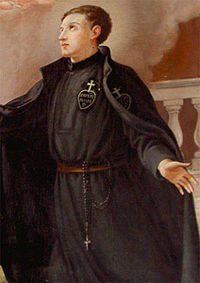
St. Gabriel of Our Lady of Sorrows

Sometimes it is the little things that count. We must use love in even the small details of our life. It is the way we treat people each and every day that makes a difference. It pleases God not only when heroic deeds are done, but when we treat others with compassion. Who knows, the little things might lead you to holiness, much like today's saint, St. Gabriel of Our Lady of Sorrows.

Francesco Possenti was born in Assisi, to a large professional family, with his father working for the local government. Tough times had struck the Possenti family early on, for Francesco's father had to travel often because of his job, and his mother and two of his sisters had died when he was still young.

Francesco definitely enjoyed living life to its fullest, going to parties, dating different women, and even earning the nickname, "the dancer." Nevertheless, he had multiple brushes with death, which included falling ill and nearly getting struck by a bullet. He vowed to enter religious life after he recovered from these experiences, but it was simply brushed aside. Furthermore, one of his brothers died and another committed suicide. It was not until he fell ill again, that he put his vow into motion and applied to enter the Jesuits. Unfortunately, he was denied, most likely because of his age, but this did not stop him. Again, after another one of his sister's deaths, he applied and was accepted into the Passionist Congregation.

A large part of Francesco's family, including his father, tried adamantly to dissuade him from joining the Passionists, but this was to no avail. After arriving at the novitiate, Francis received his habit and the name "Gabriel of Our Lady of the Sorrows." Gabriel excelled both academically and spiritually, always remaining joyful. He prayed often, loved the poor, and cared about other people's feelings, never failing to focus on the small things. At this time, Gabriel started showing the first signs of tuberculosis, but this did not slow him down in the least bit.  His peers remained by his side, and he maintained strict observance of Passionist followings, showing amazing devotion towards the Virgin Mary.

Gabriel would have his writings burnt, for fear of the temptation of pride. And, before being ordained, Gabriel passed. However, immediately before his death, it is said that he sat up, with his face radiant, grabbing for a figure that was not visible. Some believe that he had seen the Virgin Mary.

Gabriel displayed valiant virtues in the short time that he was alive. He never gave up, he always kept a smile on his face. He was meticulous in his love, caring for every single person, no one was insignificant in St. Gabriel's eyes. St Gabriel of Our Lady of Sorrows is a true example to both young and old of how we should treat other people and how we should live our lives as children of God.

Luke

Tuesday, February 26, 2013

The Space In and Around Us

In this upcoming Sunday's Gospel, Jesus told this parable: "There once was a person who had a fig tree planted in his orchard, and when he came in search of fruit on it but found non, he said to the gardener, 'For three years now I have come in search of fruit on this fig tree but have found none.  So cut it down.  Why should it exhaust the soil?'  He said to him in reply, 'Sir, leave it for this year also, and I shall cultivate the ground around it and fertilize it; it may bear fruit in the future.  If not you can cut it down.'"

This Lent I am part of a Facebook Lent retreat, which is really cool because it encourages me to read the upcoming Sunday Gospel all week long!  This parable really resonated with me because it reminded me of my own story.  In this parable the gardener knows how important it is to fertilize and cultivate the area around the tree.  The same goes for us, the space we create in and around us is important for our spiritual growth. 

I really understand this message.  For a long period of my life, and even occasionally now, I fed lies to myself.  You know, the typical insecurities types of things like "You're really not that pretty" or "No one would ever really love you because (insert character flaw here)."  I'm sure we've all been there.  That is NOT cultivating the space around me.  Those lies will NOT help me produce "fruit" and make the world a better place.  Then, when I got to college  I grew in my faith as I began to know God better and to know his character better.  I began to love myself because God created me.  As I really began to better understand  Jesus' undeniable, unfailing, and complete love for me, I began telling myself truths.  As awkward as it might be, I started to look in the mirror and smile because God made me beautiful because he made me me!  Most people wouldn't notice much of a change because I was always a happy person but I definitely noticed the incredible, deep, internal happiness I found as a result of these truths and recognizing my true worth, not the lies.  And with that happiness, the world was a much different place for me.  That's cultivating the space around me.  Love and acceptance help me produce fruit.  Why would I want negativity and doubts when I could have positivity and confidence?  Love is powerful and wonderful and that is what I need because they make me want to give back with everything I have!  And that is producing fruit =)

Until next time,
Mel

Wednesday, February 20, 2013

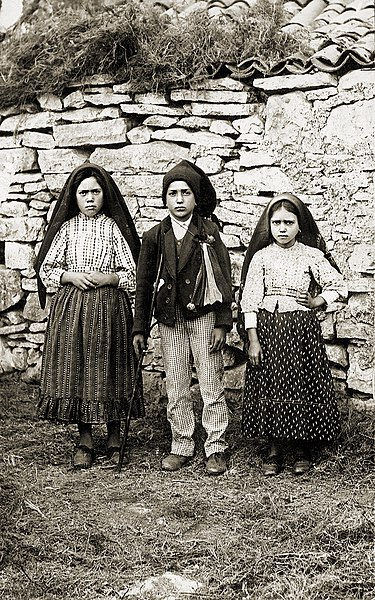
Blesseds Jacinta and Francisco Marto

The Church has always been cautious about endorsing alleged visions. However, there are benefits, such as people changing their lives after one of these tremendous events.

Our Lady of Fatima is a title given to Mary after she had appeared to three children on the thirteenth day of six consecutive months during 1917. This all took place at Fatima, Portugal, and the three children included Lucia Santos, and her cousins Jacinta and Francisco Marto. Besides the spiritual implications, these visions also had a profound impact on the local politics. Europe had been engaged in an extremely bloody war and Portugal was in political turmoil, with its monarch being overthrown in 1910, and all religious organizations being disbanded soon thereafter.

Jacinta and Francisco were typical Portugese children, they could not read, but, instead, relied on their rich oral history. They worked with Lucia to take care of the family sheep. After the visions, all three felt the need to save sinners through penance and sacrifice. Thus, many times they would practice self-mortification. Even though the 1918 Influenza epidemic was ravaging Europe, Jacinta and Francisco would insist on walking to church to prostrate themselves and pray for hours on end. The Blessed Virgin Mary had instructed them to pray the rosary in order to bring world peace and end war. They were to pray for sinners and for Russia, which had just overthrown Czar Nicholas II and was going to fall prey to communism. These children showed amazing dedication to their faith, even in the face of disease and death. It is amazing that they were able to trust God and put their lives into His hands to guide them. However, both died peacefully, with Jacinta offering her suffering up for the sake of all sinners. Amazingly  her face has been found to be incorrupt after many years. An interesting fact is that Jacinta is the youngest non-martyred child to be beatified. Jacinta and Francisco's cousin, Lucia, died only very recently in 2005. She became a Carmelite nun at a young age. Currently, the five year waiting period after death for beatification has been waived for her. The shrine dedicated to the visions of Our Lady of Fatima is visited by over 20 million people yearly.

These instances in history are truly amazing, but we must remember that, even though we are not able to see God, Mary, or Jesus, face-to-face, they are in the people that we meet every single day. It is faith that helps us to believe even when we are not able to touch or see. This event also shows that even children will go to amazing lengths to fulfill the will of God. We should strive to look to the saints as role models in our everyday life.

Luke

Tuesday, February 19, 2013

"Lord, I am not worthy..."

When I really started to listen to the words spoken at mass and really understand what those words meant, the mass took on a whole new meaning for me.  One of the most powerful parts of the mass is when I say, "Lord, I am not worthy to receive you.  But only say the word and my soul shall be healed."

Uhm hello, how crazy is that!  Here I am in my little pew, meshing in with the rest of the congregation and then there I go addressing God personally.  Because the truth is, I am so so not worthy to receive the body of Christ.  I honestly and truly mean it when I say, "Lord, I am not worthy to receive you."  I look back on my week and am overcome with my faults and failings.  I am not proud of everything I have done, even just that week!  There were times where I sinned against myself, my neighbor, and God.  There were so many times where I failed to put Christ and my relationship with him first.

And now I am being presented the body of Christ?  I do all of these things and then I am supposed to receive the most wonderful gift of all time?  But God, I am SO NOT worthy! And I admit that right then and there to God personally.  But the next part is the definition of grace: "But only say the word and my soul shall be healed."  My soul is healed by a word.  I am forgiven because God said so.  And that is overwhelming and wonderful.

What parts of the mass mean the most to you and why?

Until next time,
Mel